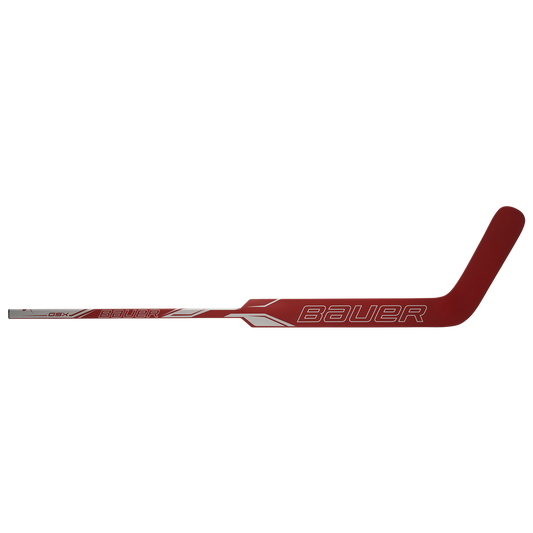
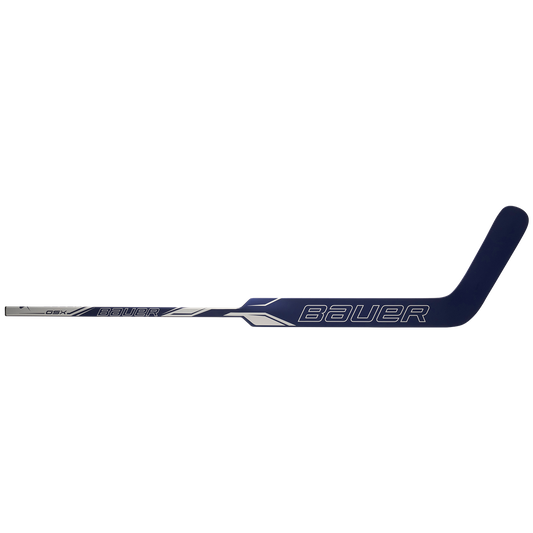
Goalie Sticks for Every Age and Playing Level
A goalie stick plays an important role in stance, balance, rebound control, puck handling and five-hole coverage. The correct stick should feel comfortable in the goalie’s hand while allowing the blade to remain properly positioned on the ice.
The Goalie Crease carries goalie sticks for beginner, recreational, competitive and elite goalies. Our selection includes senior, intermediate and junior sticks across a range of paddle lengths, constructions, blade patterns and price points.
Choosing the right goalie stick involves more than selecting a favourite brand or colour. Paddle size, shaft dimensions, weight, flex, blade shape and the goalie’s stance should all be considered.
Senior Goalie Sticks
Senior goalie sticks are generally designed for adult-sized goalies and larger players. They commonly feature longer paddle options, full-sized shafts and constructions suited to higher levels of play.
Senior sticks are available in multiple paddle lengths, allowing goalies to choose a size that complements their height, stance and hand position. A taller goalie does not always require the longest available paddle, especially if they use a lower or wider stance.
Intermediate Goalie Sticks
Intermediate goalie sticks are designed for growing goalies who need a smaller shaft and paddle than most senior models. They can also be suitable for adult goalies who prefer a smaller shaft diameter or shorter paddle.
Intermediate sticks often provide a useful transition between junior and senior equipment. The best size depends on the goalie’s stance, hand size, height and overall comfort rather than age alone.
Junior Goalie Sticks
Junior goalie sticks are built for younger goalies with smaller hands and shorter body dimensions. A properly sized junior stick should be light enough to control while allowing the goalie to maintain a balanced stance and keep the blade positioned on the ice.
Using a stick that is too large can force a young goalie into an upright stance, push the blocker hand too high or make puck handling more difficult. The correct junior stick should support proper technique instead of creating unnecessary strain.
How to Choose the Right Goalie Stick Paddle Size
Paddle size is one of the most important factors when selecting a goalie stick. The paddle is the wider section between the blade and shaft, and its length affects where the blocker hand sits while the blade is on the ice.
A paddle that is too long may cause the blocker shoulder and elbow to rise, create gaps under the arm or make it difficult to maintain a compact stance. A paddle that is too short may force the goalie to reach downward or bend excessively at the waist.
The correct paddle size should allow the goalie to:
- Maintain a comfortable and balanced stance
- Keep the stick blade flat or appropriately positioned on the ice
- Hold the blocker hand in a natural position
- Cover the five-hole without excessive reaching
- Move the stick freely during saves and puck handling
- Control rebounds without lifting the shoulder unnecessarily
Paddle measurements are not always identical between brands. A listed 25-inch paddle from one manufacturer may feel different from the same listed size from another brand because of measurement methods, blade angle and paddle geometry.
Goalie Stance and Stick Sizing
A goalie’s stance can influence the ideal stick size. Goalies who use a lower, wider stance may prefer a shorter paddle than players of the same height who stand more upright.
The stick should be evaluated while the goalie is wearing skates and standing in their normal ready position. Measuring only by height can lead to a paddle that does not match the goalie’s actual stance.
Growing goalies should have some reasonable room for development, but purchasing a significantly oversized stick can interfere with technique and puck control.
Composite Goalie Sticks
Composite goalie sticks are popular because they can provide a lightweight, balanced and responsive feel. Modern composite construction can make it easier to move the stick quickly, direct rebounds and handle the puck.
Higher-level composite sticks may use advanced materials to reduce weight while maintaining strength. Different models may feel softer, stiffer or more balanced depending on how the materials are distributed throughout the shaft, paddle and blade.
Competitive goalies who play frequently may prioritize weight, balance and puck-handling response, while recreational players may place greater emphasis on durability and value.
Foam-Core and Traditional Goalie Sticks
Foam-core and traditional goalie sticks generally provide a different feel than modern composite models. Some goalies prefer their familiar balance, impact feel and construction.
These sticks may be heavier than premium composite options, but they can still be a practical choice depending on the goalie’s preference, level of play and budget.
Goalie Stick Flex and Shaft Feel
Goalie sticks are not always marketed using the same flex ratings as player sticks, but shaft stiffness and feel still vary between models. A stiffer stick may feel more direct when handling the puck, while a softer construction may provide a different release and impact response.
Shaft size is also important. Junior and intermediate sticks typically use smaller shaft dimensions that are easier for smaller hands to hold. Some senior goalies also prefer an intermediate-sized shaft because it feels more secure in the blocker hand.
Goalie Stick Blade Patterns
Blade pattern affects puck handling, passing and shooting. Goalie stick blades are available in different curves, lies and face angles, with options for both regular and full-right goalies.
A more open blade may help lift the puck, while a flatter or more closed pattern may provide a different passing and control feel. The best blade pattern depends on the goalie’s puck-handling technique and personal preference.
Always confirm whether you require a regular or full-right stick before ordering. A regular goalie typically holds the stick in the right hand and wears the catcher on the left. A full-right goalie holds the stick in the left hand and wears the catcher on the right.
Goalie Stick Weight and Balance
Overall weight is important, but balance can have just as much influence on how a goalie stick feels. A well-balanced stick may feel easier to control than a lighter model with weight concentrated in an uncomfortable area.
Goalies should consider how the stick feels during stance, poke checks, paddle-down saves, rebound control and puck handling. The ideal model should feel controlled rather than blade-heavy or difficult to move.
Taping a Goalie Stick
Goalie stick tape can improve grip, protect the blade and create a more comfortable knob at the top of the shaft. Goalies use different taping styles depending on their preference and how they hold the stick.
Browse our
goalie hockey tape
for stick blades, handles, knobs and equipment adjustments.
Avoid creating a knob that is so large that it becomes difficult to release the stick when needed. The grip should feel secure while still allowing the goalie to move the hand naturally.
Goalie Sticks and Blocker Fit
The stick shaft must fit comfortably inside the blocker palm. A shaft that feels too large may be difficult for a younger goalie to grip, while excessive space around a small shaft can reduce control.
Browse our
goalie blockers
to compare palm size, board balance, finger protection and overall fit.
When selecting a new stick and blocker, consider how the two pieces feel together. The goalie should be able to hold the stick securely without excessive hand tension.
Goalie Sticks From Leading Brands
Different manufacturers use their own paddle shapes, blade constructions, shaft dimensions and balance profiles. A stick with the same listed paddle length may feel noticeably different depending on the brand and model.
Explore goalie equipment from leading brands, including:
How Many Goalie Sticks Should You Have?
Competitive goalies should consider keeping a backup stick available in case their primary stick becomes damaged during a game or practice. Ideally, the backup should have a similar paddle size, blade pattern and feel.
Carrying two matching or similar sticks can make it easier to switch without making a major adjustment during a game. Goalies who travel frequently for tournaments may also benefit from having an additional stick available.
Transporting and Caring for Goalie Sticks
Inspect the shaft, paddle, heel and blade regularly for cracks, soft areas or other signs of damage. Composite damage may not always be immediately visible, so pay attention to changes in sound, flex or feel.
Avoid leaving goalie sticks in extreme heat or cold for extended periods. Allow wet tape and equipment to dry after use, and replace worn blade tape when necessary.
Shop our
goalie equipment bags
for storage and transportation options for the rest of your goalie setup.
Shop Goalie Sticks Across North America
The Goalie Crease is a goalie-only specialty retailer serving customers throughout Canada and the United States. Because we specialize exclusively in goalie equipment, our team understands how paddle length, shaft size, blade pattern and stick balance can affect a goalie’s stance and performance.
Shop goalie sticks online across North America or visit our 4,000+ square foot goalie-only showroom in Richmond Hill, Ontario. Our goalie equipment experts can help you compare models, determine the appropriate paddle size and find a stick that feels right for your game.