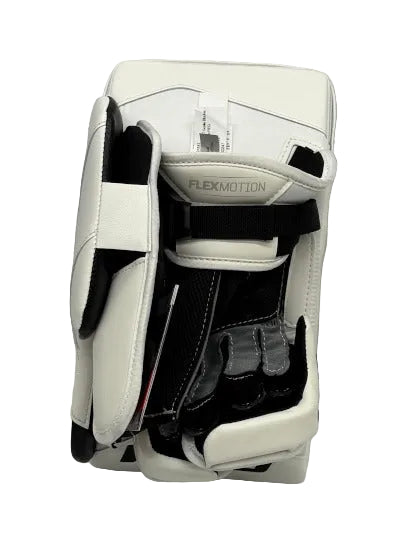
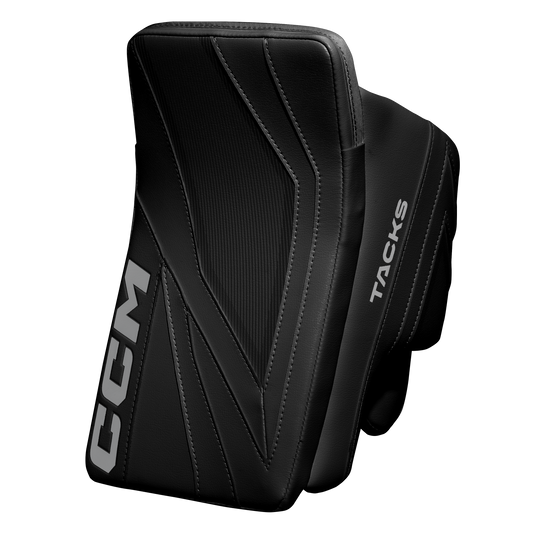
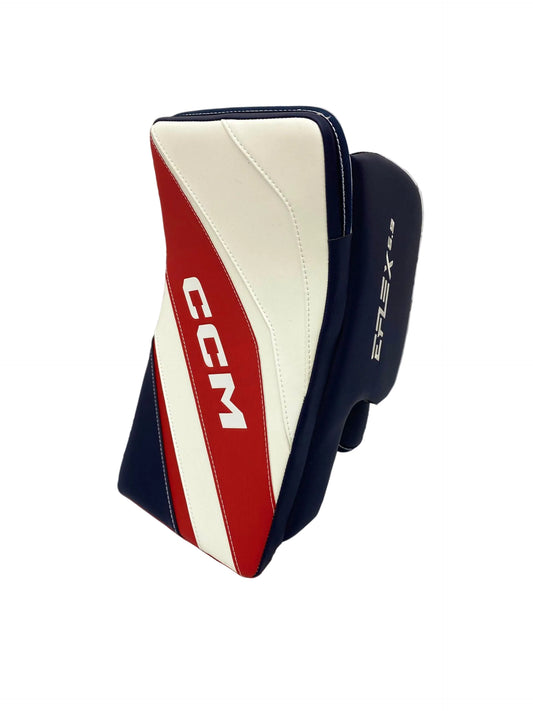
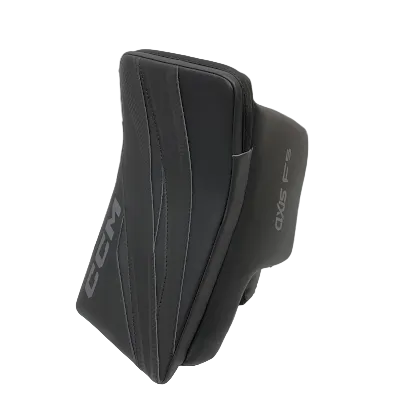
CCM Goalie Blockers for Every Age and Playing Level
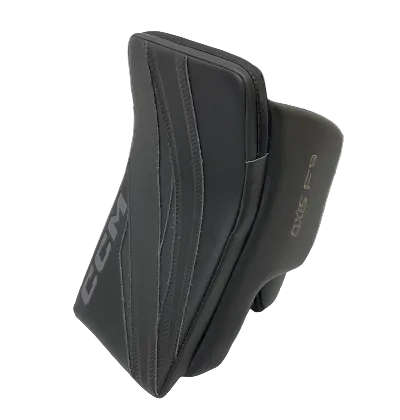
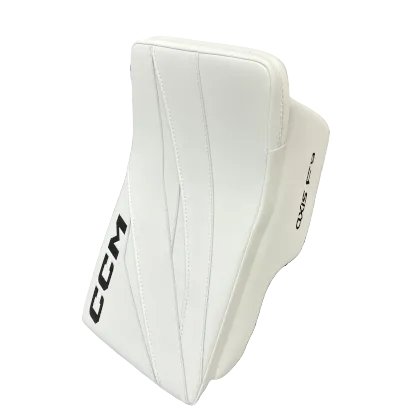
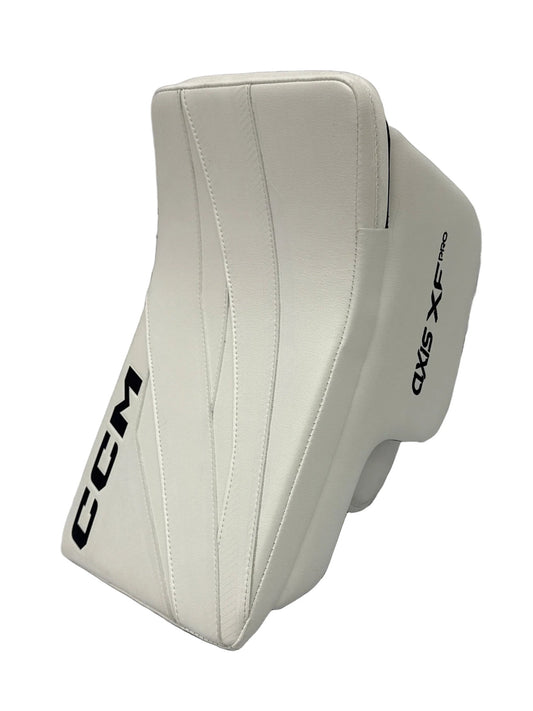
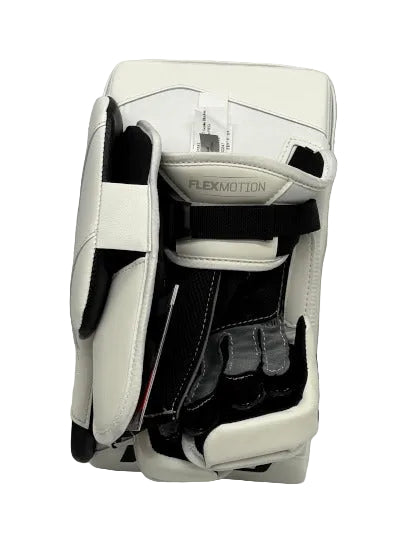
CCM goalie blockers are designed to protect the stick hand while helping goalies control rebounds and direct pucks away from dangerous scoring areas. Although blockers can appear similar, differences in board construction, palm sizing, hand placement and sidewall protection can significantly affect how each model feels and performs.
The Goalie Crease carries CCM blockers for beginner, recreational, competitive and high-level goalies. Available options may include senior, intermediate and junior sizes across different protection levels, constructions and price points.
Because our store specializes exclusively in goalie equipment, our team can help you compare CCM blocker models and determine which size, palm fit and board design best match your hand and playing style.
Senior CCM Goalie Blockers
Senior CCM goalie blockers are generally designed for adult-sized hands and goalies facing faster, harder shots. They typically use full-sized blocker boards, larger palm dimensions and protective features suited to adult and competitive hockey.
A senior blocker should remain securely positioned while allowing the goalie to maintain a natural grip on the stick. Palm fit can vary between CCM models, so the blocker should be evaluated according to hand size and comfort rather than the listed age category alone.
Intermediate CCM Goalie Blockers
Intermediate CCM blockers are designed for growing goalies who need a smaller internal hand fit than a full senior model. They may also suit teenage goalies or players with smaller hands who still require competitive protection.
The palm should hold the hand securely without excessive movement. The goalie should be able to wrap their fingers comfortably around the stick shaft without the blocker twisting, sliding or feeling difficult to control.
Browse our
intermediate goalie blockers
to compare available CCM options with other brands and models.
Junior CCM Goalie Blockers
Junior CCM goalie blockers are built for younger players with smaller hands. Junior equipment generally uses reduced internal dimensions and a more manageable overall size to help developing goalies maintain stick control and proper hand positioning.
A blocker that is too large may rotate around the hand or make it difficult for a young goalie to grip the stick securely. Junior sizing should fit the goalie’s current hand rather than being purchased excessively large to allow for future growth.
Explore our
junior goalie blockers
for CCM models and other youth-sized options.
How Should a CCM Goalie Blocker Fit?
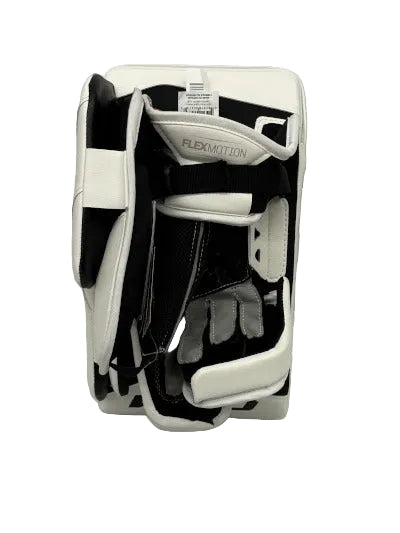
A CCM goalie blocker should fit securely around the hand without painful pressure points or unnecessary internal movement. The palm should keep the hand connected to the blocker board while allowing comfortable finger, thumb and wrist movement.
Important fitting areas to review include:
- Palm length and overall hand fit
- Finger positioning inside the palm
- Thumb comfort and protection
- Security of the internal straps
- Wrist mobility
- Blocker-board balance
- Clearance around the chest protector cuff
- Ability to maintain a natural stick grip
A blocker that is too large may rotate or shift during saves. A blocker that is too small may restrict the fingers, create pressure points or make the stick difficult to hold comfortably.
CCM Blocker Palm Fit
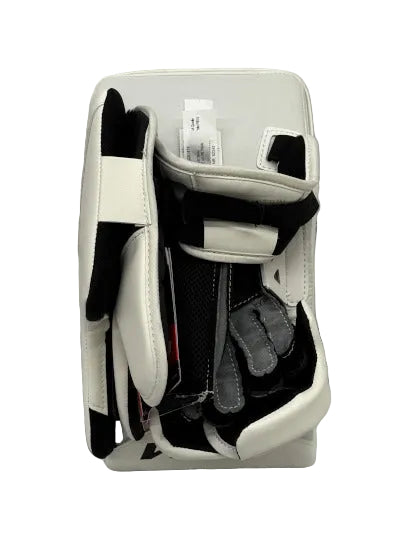
Palm fit is one of the most important considerations when choosing a goalie blocker. The palm connects the goalie’s hand to the blocker board and directly affects comfort, control and balance.
Different CCM blockers may use different palm dimensions, materials and internal adjustment systems. Goalies should consider how securely the palm holds the hand and whether the fingers can wrap naturally around their regular goalie stick.
The palm should feel secure without being excessively tight. A loose palm may allow the blocker to shift, while an overly tight palm can restrict hand movement and make stick control uncomfortable.
CCM Blocker-Board Construction
The blocker board is designed to deflect shots and help the goalie direct rebounds away from the middle of the ice. Differences in board stiffness, thickness, shape and internal construction may influence rebound response and overall feel.
Some goalies prefer a firm blocker face that produces strong rebounds toward the corners. Others prioritize predictable control and a balanced feel that makes it easier to angle pucks away from dangerous areas.
The right board construction depends on the goalie’s technique, hand position, playing level and preferred rebound-control style.
Blocker Balance and Hand Position
The location of the palm behind the blocker board affects how the equipment balances on the hand. A well-balanced blocker can make it easier to maintain active hand positioning and control the direction of rebounds.
Some blockers position the hand higher behind the board, while others use a more centred or lower placement. These differences can influence how the board sits in the goalie’s stance and how easily it can be rotated or angled toward the corners.
The blocker should feel controlled rather than excessively top-heavy, bottom-heavy or loose when the goalie holds their stick normally.
Rebound Response
A CCM blocker’s construction can affect how quickly the puck leaves the board after contact. Firmer models may create more active rebounds, while other designs may provide a more controlled and predictable response.
Rebound performance should be considered together with hand positioning and save technique. The blocker should help the goalie send pucks away from the crease without feeling difficult to control.
Goalies who prefer active rebound control may prioritize a firm board, while players focused on placement and predictability may prefer a more balanced response.
Finger, Thumb and Sidewall Protection
A goalie blocker must protect more than the back of the hand. Finger guards, thumb protection and sidewall coverage help protect vulnerable areas from direct shots and pucks that travel upward along the stick.
Goalies facing faster or more frequent shots may prioritize additional finger and sidewall protection. These protective components should remain secure without interfering with wrist movement or stick control.
The appropriate protection level should reflect the goalie’s age, playing level and regular exposure to high-speed shots.
Wrist Mobility and Chest Protector Compatibility
The blocker cuff should allow the goalie to move the wrist naturally while maintaining protective overlap with the chest protector sleeve. An overly restrictive cuff can make it difficult to angle the blocker or control the stick.
The chest protector arm should extend toward the blocker without pushing the glove away from its natural position. Whenever possible, test the blocker while wearing the chest and arm protector used on the ice.
Browse our
goalie chest protectors
to compare protection, arm length and mobility across available models.
Match Your CCM Blocker With a Goalie Catcher
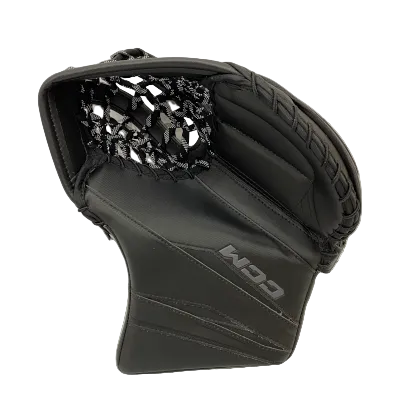
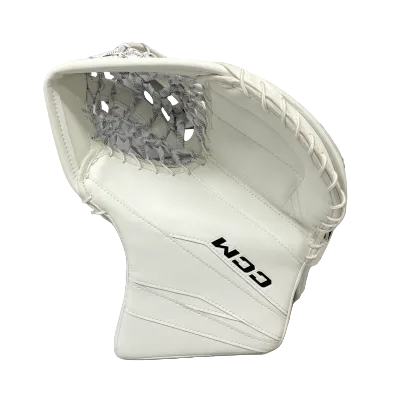
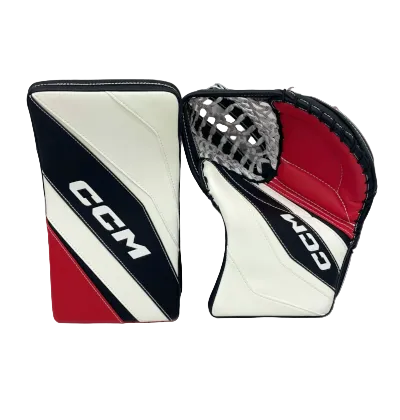
Many goalies choose a CCM catcher and blocker from the same equipment family to create a coordinated glove setup. Matching gloves can provide consistent colours, graphics and protection levels.
Browse our
goalie catchers and trapper gloves
to compare available CCM catchers with other senior, intermediate and junior options.
The catcher and blocker should still be selected according to their individual fit. A goalie may prefer a CCM blocker while choosing a catcher from another equipment line or manufacturer.
Pair Your CCM Blocker With the Right Goalie Stick
The blocker and goalie stick must work comfortably together. Palm size, stick-shaft thickness, paddle length and hand position can all influence how securely the goalie controls the stick.
Browse our
goalie sticks
to compare paddle lengths, constructions and models for senior, intermediate and junior goalies.
A properly fitted blocker should allow the goalie to maintain a natural grip without excessive tension through the fingers, wrist or forearm.
Regular and Full-Right CCM Blockers
CCM goalie blockers may be available in regular and full-right orientations. Regular goalies normally wear the blocker on the right hand and catcher on the left. Full-right goalies use the opposite setup.
Always confirm the required hand orientation before ordering. A regular blocker cannot be used as a full-right blocker, and the equipment must match the goalie’s catcher and stick configuration.
Breaking In a CCM Goalie Blocker
A new CCM blocker may initially feel firmer or more structured than equipment that has been used for several seasons. With regular use, the palm and internal materials may begin to conform more closely to the goalie’s hand.
Break-in time depends on the model, palm construction, frequency of use and personal preference. The blocker should become more comfortable while continuing to remain securely positioned.
Do not use excessive heat or unapproved modification methods that could damage the protective materials or affect the product warranty.
Caring for Your CCM Goalie Blocker
After practices and games, remove the blocker from the equipment bag and allow it to dry fully in a ventilated area. Moisture can contribute to palm wear, odour and deterioration of internal materials.
Inspect the blocker regularly for torn palms, damaged straps, loose lacing, cracked protective components or other signs of wear.
Follow the manufacturer’s care instructions and avoid cleaning methods that may damage foams, adhesives, palms or protective materials.
When Should a Goalie Blocker Be Replaced?
A CCM blocker may need replacement when the palm can no longer hold the hand securely, the board or sidewall is structurally damaged or the protective components have significantly deteriorated.
Growing goalies should have the palm fit checked regularly. A blocker that previously fit correctly may become too small as the goalie’s hand grows.
Do not continue using a blocker with major damage, exposed protective materials or components that can no longer remain securely positioned.
Choosing the Right CCM Goalie Blocker
The highest-priced CCM blocker is not automatically the best choice for every goalie. The correct option should match the player’s hand size, playing level, protection requirements, preferred balance and budget.
When comparing CCM goalie blockers, consider:
- Senior, intermediate or junior palm sizing
- Regular or full-right orientation
- Internal hand security
- Blocker-board construction and balance
- Hand position behind the board
- Finger, thumb and sidewall protection
- Wrist mobility
- Rebound response
- Compatibility with the goalie stick
- Level and speed of shots being faced
Growing goalies should have enough room for comfort, but blockers should not be purchased excessively large. Oversized equipment can reduce control and make it harder to maintain a secure stick grip.
Complete Your CCM Goalie Setup
A CCM blocker can be paired with matching CCM pads and a catcher or combined with equipment from other manufacturers. Every piece should be selected according to how it fits and performs for the individual goalie.
Explore our
CCM goalie equipment
collection for available pads, catchers, masks, chest protectors, pants, skates, sticks and accessories.
You can also browse our complete
goalie blocker collection
to compare CCM blockers with products from Bauer, TRUE, Warrior, Brian’s and other leading goalie brands.
Shop CCM Goalie Blockers Across North America
The Goalie Crease is a goalie-only specialty retailer serving customers throughout Canada and the United States. Our team understands the differences between CCM blocker models, palm fits, board designs and protection levels.
Shop CCM goalie blockers online across North America or visit our 4,000+ square foot goalie-only showroom in Richmond Hill, Ontario. Our goalie equipment experts can help you compare models, confirm sizing and choose a blocker that feels secure, balanced and comfortable.


 Sold out